
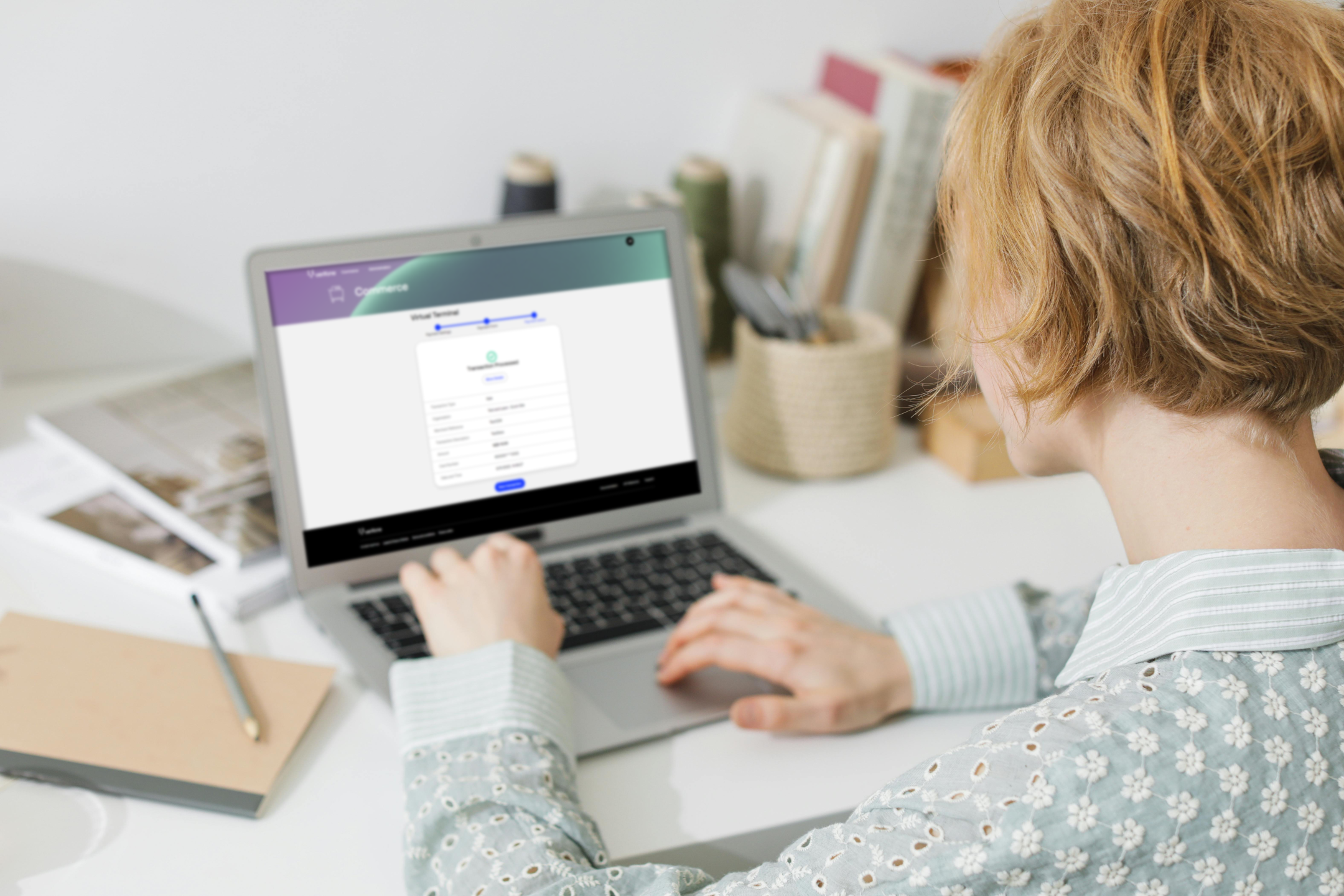
New Zealand small businesses can accept online payments in three main ways: payment links, virtual terminals, and ecommerce gateway integrations. The right fit depends on whether you have a website, how your customers buy from you, and how much setup you want to take on.
What are the main ways to accept online payments in New Zealand?
Payment links — you generate a URL and send it to the customer via email, SMS, or on an invoice. They click the link and pay by card on a secure online checkout. No website needed. Good for service businesses, tradespeople, and one-off transactions.
Virtual terminal — you enter the customer's card details manually through a browser, usually while taking an order over the phone. Standard for mail-order and phone-based businesses.
Ecommerce gateway integration — connects your online store to card processing. For platforms like Shopify and WooCommerce, plugins typically handle the setup without custom development. Most providers also offer a hosted payment page (where the customer is redirected to a standalone checkout), an iFrame embedded directly in your store, or API integration for more custom builds.
Which online payment providers do NZ businesses use?
Eftpos NZ (Verifone)
Eftpos NZ offers online payment tools built for NZ merchants, including payment links, a virtual terminal for phone and mail-order payments, and ecommerce integrations for taking payment on your online store.
Merchants using both instore EFTPOS terminals and online payments can manage transactions and reporting through a single portal, Verifone Central. This is useful for businesses running both a physical shopfront and an online store, as it removes the need to reconcile across separate systems. Local support is based in New Zealand. If something goes wrong with a transaction or integration, you're not waiting in an offshore queue.
Pricing: eftpos.co.nz/online-payments/pricing
Stripe
Stripe is a popular international provider offering ecommerce checkout pages, recurring subscriptions, and invoicing. It works well for online-only retailers. As an international provider, payout times can be longer than NZ-based alternatives, and some merchants report the interface is less intuitive at high transaction volumes.
Pricing: stripe.com/nz/pricing
Shopify Payments
Shopify Payments is built into the Shopify platform, making it convenient if you are already running a Shopify store. It supports major payment methods and international currencies, which is useful if you sell to overseas customers. It only works within Shopify — if you change platforms, you will need a new provider.
Pricing: shopify.com/nz/pricing
Windcave
Windcave (formerly Payment Express) is an NZ-based gateway that works for merchants running both a physical store and an online presence. It supports Apple Pay and PayPal and integrates with WooCommerce and Shopify. Windcave charges a monthly fee on top of per-transaction fees and a separate merchant services rate meaning, costs stack up across multiple line items. For lower-volume businesses, that fixed monthly commitment can make it one of the higher-cost options relative to what you're processing.
Pricing: Contact Windcave
Worldline
Worldline is an NZ-based payment gateway with overnight settlement, no-code options (payment links and a virtual terminal), and integrations with Shopify, WooCommerce, Magento, and others. They also offer 24/7 local support. Their solution is well-suited to larger or scaling businesses — particularly those with complex integration needs or high transaction volumes.
Pricing: Worldline ecommerce payments
Which online payment option is right for my business?
| Your situation | Best fit |
|---|---|
| No website, occasional invoicing | Pay By Link |
| Taking card payments over the phone | Virtual Terminal |
| Online store | eCommerce integration |
| Mix of instore and online | Multi-channel provider |
Online payments FAQs
What transaction fees do NZ merchants pay for online card payments?
Online card fees in New Zealand typically include a merchant service fee (MSF) charged as a percentage of each transaction, sometimes combined with a flat per-transaction fee. Rates vary by provider and card type.
Key factors that affect what you pay:
- Card type — domestic debit cards typically attract lower fees than international credit cards
- Card scheme — Visa and Mastercard rates differ from Amex
- Card-not-present risk premium — online transactions carry higher fraud risk than in-person tap-and-go, so fees are generally higher than for in-store payments
If you're comparing providers, ask for their blended rate across your typical transaction mix, not just the headline rate.
What is the easiest way to start accepting online payments for a small NZ business?
For most businesses starting out, a payment link is the lowest-friction option. You don't need a website, shopping cart, or developer. You generate a link, send it to the customer, and they pay by card online. Settlement typically lands in your bank account within one to two business days.
For businesses with an existing online store, a gateway integration is more appropriate. Most major NZ payment providers offer plugins that can be installed without custom development.
What is a card-not-present payment, and how does it work in New Zealand?
A card-not-present (CNP) payment is any transaction where the cardholder isn't physically there — online checkout, phone orders, and payment links all count. Because you can't verify the card with a chip or tap, CNP transactions carry a higher risk of fraud and chargebacks.
To reduce your risk:
- Use a provider with built-in fraud detection and 3D Secure authentication (Verified by Visa / Mastercard SecureCode)
- Keep records of order details, delivery confirmation, and customer communication
- Be cautious of high-value orders from unfamiliar customers, particularly with international cards
- Check your provider's chargeback policy before taking CNP payments at volume
What is the safest way to take card payments remotely in New Zealand?
The safest approach combines a reputable NZ-based provider, 3D Secure authentication, and clear fraud controls. 3D Secure adds a verification step for the cardholder and, in most cases, shifts liability for fraudulent transactions from you to the card issuer.
For phone-based payments, a virtual terminal is the standard tool. Look for a provider that offers detailed transaction reporting and lets you process refunds directly from the same interface.

.png "How Advantage Tyres Are Boosting Profits With Verifone Online Payments")

Comments